
Internal Web-app Streamlined Workflow, Boosts Productivity by 49%
Project Management Tool (SaaS)
My Role: Ux Designer & Researcher
.png)
My Role
I led the project, working closely with the lead product owner, developers, and other stakeholders.
Introduction
The esteemed client Johnson and Johnson entrusted Company X with the delivery of their multi-channel marketing initiatives. Brand leaders routinely communicated their requisites through various platforms such as electronic mail, Microsoft Teams, or the JIRA tool.
Regrettably, the fragmented communication across diverse instruments rendered the maintenance of documentation an arduous and error-prone undertaking. Crucial data encompassing brand identity, therapeutic field, geographic location, and asset category was frequently overlooked due to the laboriousness of collating and assembling information from disparate sources.
This presented significant obstacles in project documentation, monitoring, cost estimation, delivery delays, and showcasing past achievements. Furthermore, project coordinators, upon engaging with brand leaders via electronic mail or Microsoft Teams, were tasked with disseminating the specifics to other stakeholders.
In contrast, alternative solutions such as other available tools were either exorbitantly priced, excessively intricate, or lacked the requisite customization options critical for efficient management of pharmaceutical digital assets.
Problem #1
No Defined Project Initiation
Example : The client imparted information through Jira, electronic mail or collaborative software platforms.
Impact : Data misplaced and time wastage
Communication through different tools
.png)
Problem #2

Confused on where to share the details - email, teams, or to put on company's website.
Problem #3
Repetitive tasks and activities
Example : Clients sometimes wanted to use prior project details, but there was no option to copy and paste them.
Impact: The client directly requested the project manager to obtain specific details from the "X" project. this request confused the project manager as there was the potential for misunderstandings.
Challenge in sharing details
Example: Clients want insight into different assets where the company offers its services. The company can't display critical assets on its website and lacks a platform to showcase the types of assets and pricing info.
Impact : Company Hindered in Sharing Service Offerings and Pricing, Relying on Email or Chat Poses Transparency Issue

Cloning the previous details
Problem #4

Underutilised cost to company
Unnecessary Cost to the Company
Example : Initially, the team utilized Jira; however, this platform proved to be counterproductive and financially burdensome. Consequently, the business recognized the necessity for a tailored solution that could be developed at a lower cost.
Impact: The client's underutilisation of other tools results in inefficient investment for the company.
Defining the problem
How can we craft a superior experience for our esteemed clients that optimizes their time, streamlines the process, and enhances efficiency?
Goals
Business Goals
Optimising Project Initiation for Enhanced Service Value and Productivity.
-
Enhance the value proposition of core services by optimising project initiation processes to ensure seamless communication, efficient data organisation, and heightened productivity for clients and internal teams.
User Goals
Operational efficiency, and better customer experience
-
Improve workflow efficiency by establishing standardised procedures for project initiation, communication, and data management.
-
Enhance collaboration and transparency within teams and with clients to streamline processes and achieve optimal operational performance.
Impact
As this is a huge project, we released the new designs in phases. For confidentiality reasons I have omitted the actual values for these metrics.
We built a management web-app tool to cater our needs
and it turned out to be a massive game changer
in the company’s business.
21%
Increase in the people who tap on duplicating project.
_edited.png)

39%
Operational efficiency, and better customer
experience with one week of launch.
67%
Client interaction with the tool was increased.

Our Users
Before we started designing, we deep dive into existing behavioural data of our client to understand them better. We also conducted a series of interviews.
We focused on identifying what is the job that our client hired our product for.
We defined 2 user archetypes and mapped them to respective jobs-to-be-done.
Client: The Habitual Creatures
An early adopter seeking to initiate the project and easily duplicate.
JOBS-TO-BE-DONE
When I grab my morning coffee;
1. I want to be able to duplicate the project details without copying all the details individually.
2. I require a platform where they can easily access comprehensive information about the company's assets and corresponding pricing for different regions and channels.
Project Manager: The Busy Person
JOBS-TO-BE-DONE
After my stand-up call;
1. I needs a accumulated data to share it with stakeholders to initiate process and to prevent data misplacement and time wastage caused by poor organisation.
2. I want a single platform for interaction with client to avoid misunderstandings and confusion when retrieving project details.
Our Process
Design Sprints
In order to expedite synergistic collaboration between various departments, our organization implemented design sprints.
During these sprints, product designers, product managers, and creative professionals were given the opportunity to contribute their innovative ideas.
The primary objective of these sprints was to foster alignment among all stakeholders with the overarching goal of enhancing the consumer experience through the resolution of user problems.

User Flow

Sketches
I drew a bunch of user scenarios to visualize ideas fast. First, I focused on coming up with lots of different ideas before narrowing them down later.
Early Design
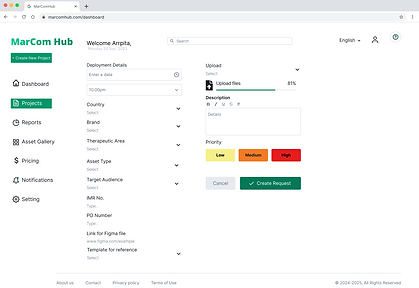
An examination of my preliminary wireframes, mid-fidelity prototypes, and sketches. The designs have undergone over six iterations for each interface. This was caused by several factors, including a shift in company strategy, a change in product direction, or a desire to improve user experience.
We ran our first designs by a bunch of users and chatted with the operations, marketing, and business teams to make sure the user experience was easy to use and could grow with us. Here are some initial layouts, which are crafted better for the portfolio purpose.
I really wish I could show you every detail of the process!



Usability Testing & Customer Interviews
To validate our designs or test prototypes,customer interviews are done remotely. We've tested the prototype with 14+ people in a controlled testing environment.
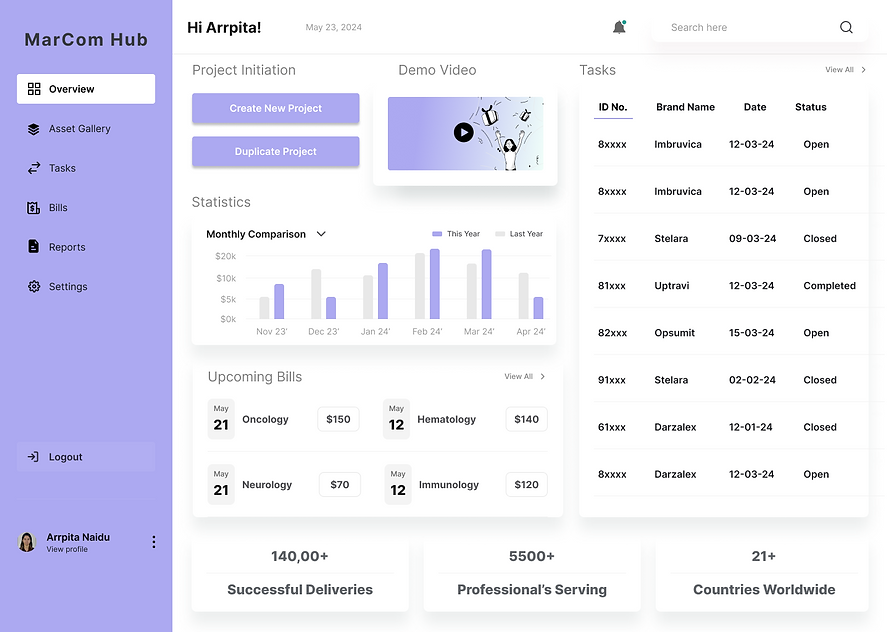
Final Designs



What we learned
Adapt to the evolving consumer behaviour
It was imperative to maintain a grounded and goal-oriented approach while concurrently accommodating product modifications to align with evolving customer behaviours.
Products Function Within a Larger Ecosystem
A comprehensive user experience overhaul has a cascading effect on our internal processes.
For instance, the operations team requires a revised approach to tagging offerings and merchandise.Without collaboration, active listening, and continuous improvement of the tools they utilize, our visually appealing application redesign would be limited to a prototype and would fail to deliver the desired results upon implementation in a production environment. Consequently, we have undertaken several alignment initiatives, such as redefining our brand guidelines, to ensure a seamless transition.
Go one step at a time
We figured out how to turn hard designs into smaller, easier-to-handle parts. This makes it easier to build and fix bugs as we go.
Future
-
Address and resolve outstanding bugs and defects
-
Implement post-launch optimisation strategies
-
Ongoing development and enhancement of user experience
Thank you for reading through! Hope you enjoyed learning about my design and thought process. :)
Note: The provided data has been modified to comply with privacy regulations and company policies. This ensures that sensitive personal information remains protected.